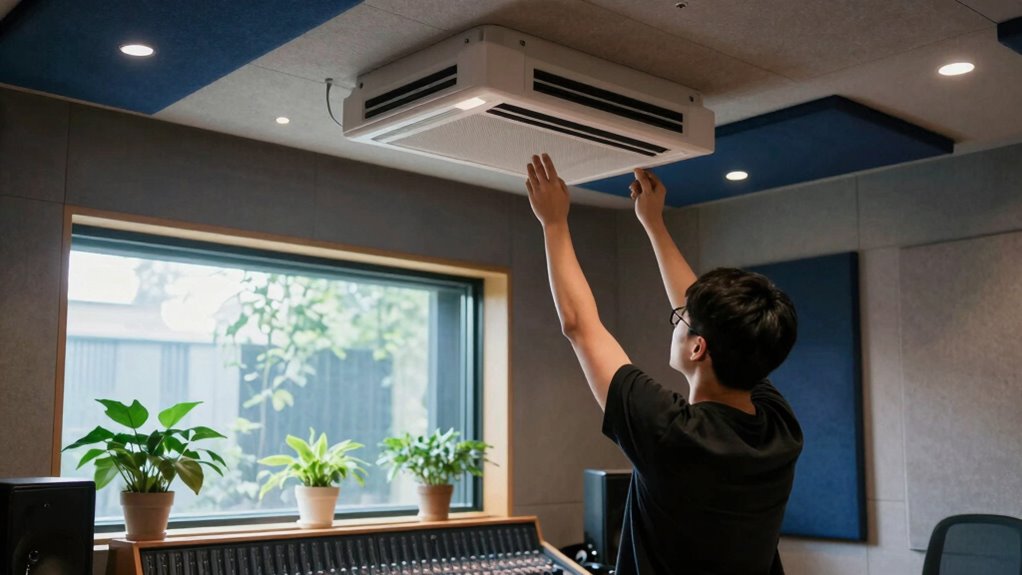
To quickly improve air quality in your studio, start by opening windows and doors to allow natural airflow, creating a steady exchange of fresh and polluted air. Use fans to direct fresh air inward and exhaust fans to remove contaminants. Pair this with air purifiers equipped with HEPA filters in key areas. Regularly maintain vents and filters to keep the system effective. Continuing with these strategies will help you create a healthier, airier space in no time.
Key Takeaways
- Open windows and doors to create immediate natural airflow and quickly dilute indoor pollutants.
- Use strategically placed fans to direct fresh air inward and push contaminated air outward.
- Incorporate air purifiers with HEPA filters near work areas for rapid removal of airborne particles.
- Monitor outdoor air quality and adjust ventilation methods accordingly for swift improvements.
- Regularly clean filters and check vents to maintain optimal airflow and air purification efficiency.
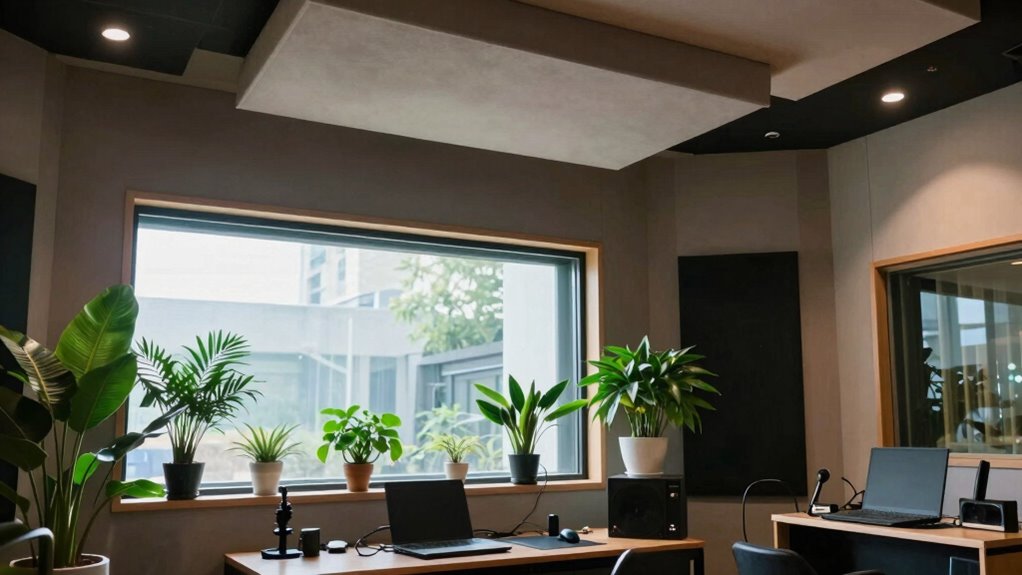
Have you ever wondered how to quickly improve air quality in your studio? It’s a common concern, especially when you spend long hours working in a confined space. Luckily, implementing effective ventilation strategies can make a noticeable difference. Ventilation is your first line of defense, helping to exchange stale indoor air with fresh outdoor air. You don’t need complex systems; even simple measures like opening windows and doors can considerably boost airflow. Positioning fans strategically can also help direct fresh air into the room and push out contaminated air. For larger or more enclosed studios, consider installing exhaust fans or air vents that facilitate continuous air exchange. The goal is to create a steady flow of air that prevents pollutants from accumulating.
But ventilation alone isn’t always enough. To really improve your studio’s air quality quickly, incorporating air purification is vital. Air purifiers equipped with HEPA filters can trap airborne particles, including dust, pollen, pet dander, and even some bacteria and viruses. This step is especially essential if your studio has poor outdoor air quality or if you’re sensitive to allergens. Position the purifier near your workspace or in areas where you spend most of your time to maximize its effectiveness. Regularly changing or cleaning the filters ensures the device continues to operate at peak efficiency. Combining air purification with enhanced ventilation creates a thorough approach—you not only bring in fresh air but also actively remove contaminants from the air already inside. Additionally, understanding indoor air quality can help you tailor these strategies more effectively. Improving air circulation can also significantly enhance how well pollutants are dispersed and removed from your space. Maintaining proper ventilation, including the use of exhaust fans, is essential for preventing the buildup of indoor pollutants. Using air exchange techniques, such as balanced ventilation systems, can further optimize indoor air quality for long-term benefits. Incorporating air quality monitoring devices can help you track improvements and identify specific issues needing attention.
To optimize these strategies, pay attention to your studio’s layout and usage patterns. If possible, create designated zones for different activities, which helps control airflow and minimizes cross-contamination. Keep air vents unobstructed and clean filters regularly to maintain airflow and filtration efficiency. During high-pollution days or in urban environments, rely more heavily on air purifiers and keep windows closed if outdoor air quality drops. Conversely, on days with good air quality, increase natural ventilation by opening windows and doors, allowing fresh air to circulate freely. Consistency is key: make these practices part of your daily routine to sustain good air quality.

VOOPNU Air Purifiers for Home, High Efficiency Filter Up to 1076 Ft², White
- Easy Operation: Intuitive control panel for simple use
- Compact Design: Small size fits any space
- Large Coverage: Covers up to 1076 sq ft
As an affiliate, we earn on qualifying purchases.
As an affiliate, we earn on qualifying purchases.
Frequently Asked Questions
Can the Setup Rule Be Applied to Residential Home Studios?
Yes, you can apply the setup rule to your home studio. Adding decorative plants naturally filters the air, while air purifiers boost air quality quickly. Place plants near your workspace and keep air purifiers running to reduce dust and pollutants. These simple steps create a healthier environment, improve ventilation, and make your home studio more comfortable and inviting for longer recording or creative sessions.
How Often Should Air Quality Be Monitored After Implementing the Rule?
Think of monitoring air quality sensors as your studio’s heartbeat—vital for health. You should check the sensors daily for the first week after implementing the setup rule, ensuring everything runs smoothly. Afterwards, monitoring can be reduced to weekly or bi-weekly checks, depending on your studio’s activity and environmental factors. Consistent monitoring helps catch issues early, keeping your air fresh and your workspace safe.
Does This Setup Rule Work in All Types of Studio Environments?
Yes, this setup rule works in all types of studio environments. You just need to guarantee your ventilation systems are properly maintained and optimized for each space. Incorporate effective air filtration to remove pollutants and improve air quality. Whether it’s a small or large studio, consistent use of proper ventilation and filtration creates healthier conditions, making it suitable across various settings. Regular checks keep everything running smoothly and effectively.
Are There Specific Equipment Requirements for This Air Quality Improvement?
No fancy gadgets are needed; just focus on ventilation efficiency and equipment compatibility. You don’t have to turn your studio into a high-tech lab—simple fans, filters, and well-placed vents work wonders. As long as your gear plays nice together and airflow improves, you’re golden. Forget the clutter—prioritize good ventilation. Your lungs will thank you, and your studio will breathe easier without breaking the bank.
What Are the Cost Implications of Adopting This Setup Rule?
Adopting this setup rule involves initial costs for equipment and installation, but it often leads to long-term savings through improved air quality. You should conduct a cost analysis to weigh expenses against benefits like reduced health risks and enhanced productivity. Budget considerations include equipment purchase, maintenance, and potential upgrades. Although upfront costs may seem high, the investment pays off over time by creating a healthier studio environment and lowering future health-related expenses.
portable exhaust fan for indoor ventilation
As an affiliate, we earn on qualifying purchases.
As an affiliate, we earn on qualifying purchases.
Conclusion
By following this setup rule, you quickly transform your studio’s air quality—like flipping a switch. It’s simple yet powerful, proving that effective change doesn’t require complexity. While high-tech filters and costly systems grab attention, sometimes the most straightforward solution makes the biggest difference. Think of it as clearing the clutter first—sometimes, the simplest step creates the clearest air. In the end, quick action beats delayed perfection, and fresh air is just a setup away.
air quality monitor for indoor spaces
As an affiliate, we earn on qualifying purchases.
As an affiliate, we earn on qualifying purchases.
As an affiliate, we earn on qualifying purchases.