To explore voice and conversational interfaces, you can use methods like usability testing to observe real user interactions and identify frustrations. Scenario-based testing helps assess system performance in daily situations, while user interviews and focus groups reveal user expectations. Analyzing data from analytics tools uncovers usage patterns and errors, and sound quality techniques improve data collection for better recognition. If you keep exploring, you’ll discover how these methods combine to create more natural and effective voice systems.
Key Takeaways
- Conduct usability testing in natural settings to evaluate system intuitiveness and gather qualitative user feedback.
- Use scenario-based testing to assess performance across diverse real-world contexts and identify robustness issues.
- Employ user interviews and focus groups to explore user expectations, frustrations, and feature needs.
- Implement data collection and analysis tools to monitor interaction metrics, error rates, and system performance over time.
- Ensure high-quality sound and speech data collection with professional equipment to improve recognition accuracy and system training.
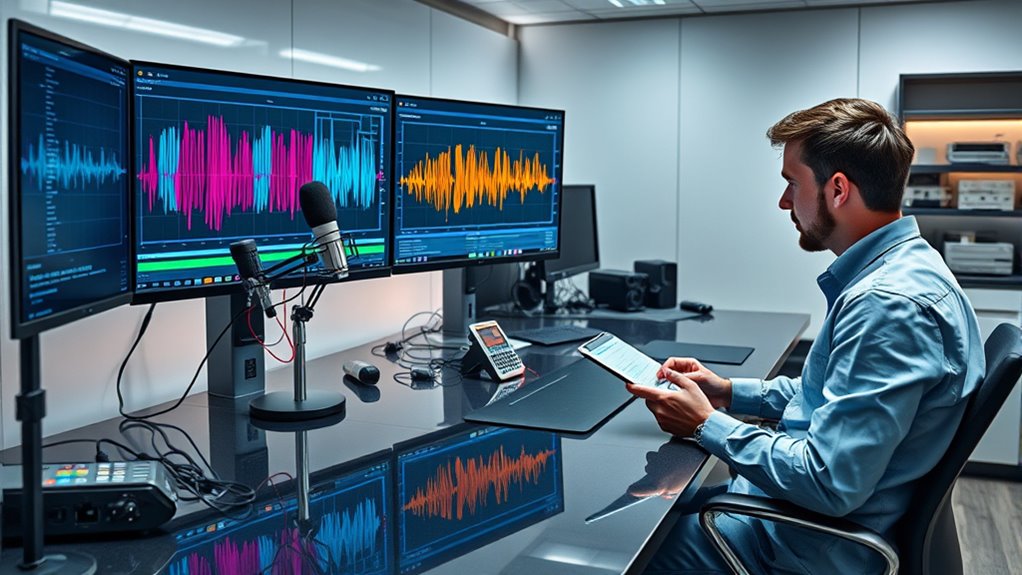
Designing effective voice and conversational interfaces requires researchers to adopt specialized methods that address the unique challenges of spoken interaction. Unlike traditional interfaces, voice systems depend heavily on how users perceive and interact with the technology through speech. To create successful experiences, you need to focus on understanding user behavior, preferences, and expectations. One of the key methods for achieving this is usability testing, which helps you evaluate how intuitive and efficient your voice interface is for real users. Usability testing allows you to observe users as they interact with your system in natural settings, uncovering issues that might not be apparent through design alone. It’s essential to gather qualitative feedback, such as user frustrations or misunderstandings, and quantitative data, like task completion times, to get a holistic picture of the user experience. By iteratively refining your system based on usability test results, you ensure that your voice interface becomes more natural and user-friendly.
Usability testing reveals user frustrations and improves voice interface intuitiveness and efficiency.
In addition to usability testing, you should leverage methods like scenario-based testing. This involves creating real-world scenarios that mimic how users might interact with your system in daily life. These scenarios help you understand contextual issues that could impact user satisfaction and system performance. For example, testing how your voice assistant responds in noisy environments or when users speak with accents can reveal weaknesses in speech recognition and response accuracy. Through these tests, you gain insights into the robustness of your system and can make targeted improvements. Incorporating sound recording techniques and high-quality equipment can significantly improve the clarity and accuracy of speech data collected during these tests, leading to more reliable system training and refinement.
Another valuable approach is conducting user interviews and focus groups. These qualitative methods enable you to explore user expectations, frustrations, and desired features. Hearing directly from users can uncover unmet needs or misconceptions about how your voice system should function. Combining this feedback with data from usability testing helps you prioritize design changes that enhance user experience.
Finally, incorporating analytics tools can offer ongoing insights into user interactions over time. Tracking metrics like frequency of use, error rates, and command success rates allows you to continuously monitor your interface’s performance. This data-driven approach ensures you can identify patterns, troubleshoot issues promptly, and adapt your system to evolving user needs.
professional voice recording equipment
As an affiliate, we earn on qualifying purchases.
As an affiliate, we earn on qualifying purchases.
Frequently Asked Questions
How Can User Privacy Be Ensured During Voice Data Collection?
To guarantee user privacy during voice data collection, you should get clear user consent before recording anything. Implement data encryption to protect the data from unauthorized access. Limit data access to only necessary personnel, and anonymize data to prevent identification. Regularly review your privacy policies and keep users informed about how their data is used. These steps help build trust and protect user privacy effectively.
What Are the Best Practices for Designing Natural Conversational Flows?
You should focus on dialogue structuring and user intent detection to create natural conversational flows. Start by designing clear, logical interactions that anticipate user needs. Use natural language, avoid rigid scripts, and allow flexibility for varied responses. Continuously test and refine your dialogue based on user feedback. Prioritize understanding user intent accurately, which helps keep the conversation flowing smoothly and feels more human and engaging.
How Do Cultural Differences Affect Voice Interface Usability?
You should consider that cultural differences markedly impact voice interface usability. Cross-cultural adaptation ensures your system respects local customs, idioms, and communication styles, making interactions more natural. Language diversity means you need to tailor your voice interfaces for various languages and dialects, avoiding misinterpretations. By understanding cultural nuances, you enhance user satisfaction, increase engagement, and create a more inclusive experience that resonates globally.
What Metrics Best Evaluate Voice Interface User Satisfaction?
You should focus on metrics like user engagement and task success to evaluate voice interface satisfaction. User engagement measures how often and how long users interact with the system, revealing their interest and comfort. Task success assesses whether users complete their goals efficiently. Combining these metrics gives you a clear picture of satisfaction, helping you identify improvements to make your voice interface more intuitive and enjoyable.
How Can Biases in Voice Recognition Systems Be Minimized?
To minimize biases in voice recognition systems, you should focus on enhancing algorithm fairness and training diversity. Make certain your datasets include diverse accents, dialects, and voices to reduce bias. Regularly evaluate your algorithms for fairness and adjust them to prevent discriminatory outcomes. Incorporate feedback from varied user groups and continuously update your training data, fostering an inclusive system that recognizes all users accurately.
noise-canceling microphone for speech recognition
As an affiliate, we earn on qualifying purchases.
As an affiliate, we earn on qualifying purchases.
Conclusion
Now that you’ve explored the landscape of research methods for voice and conversational interfaces, think of yourself as a skilled navigator charting new waters. Each method is a compass guiding you through uncharted territories of human interaction. With your newfound tools, you’ll craft interfaces that resonate like a familiar conversation, turning technology into a trusted companion. Embrace these methods, and watch your innovations blossom like a well-tended garden, vibrant and alive with possibility.
voice interface usability testing tools
As an affiliate, we earn on qualifying purchases.
As an affiliate, we earn on qualifying purchases.
high-quality speech recognition microphone
As an affiliate, we earn on qualifying purchases.
As an affiliate, we earn on qualifying purchases.