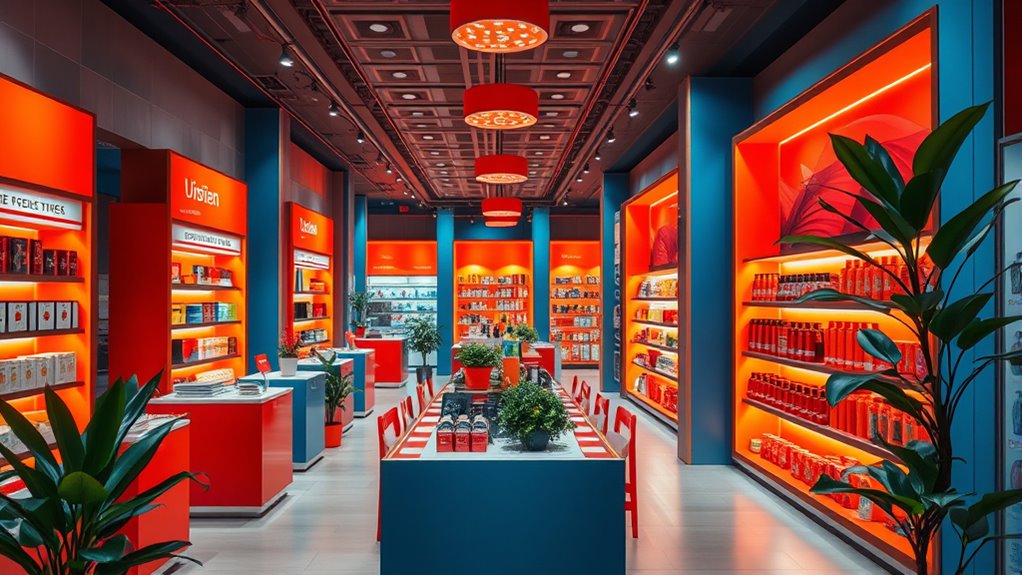

Colors subtly influence your perceptions and actions by triggering emotional responses. For example, red can increase excitement and urgency, making you more likely to act quickly, while blue fosters trust and calmness, promoting confidence. Warm tones like yellow and orange encourage friendliness and engagement, whereas cooler shades like green and purple evoke relaxation and luxury. Understanding how hues impact behavior helps you design visuals that connect deeply with your audience. Keep exploring to discover how mastering color psychology can elevate your strategies.
Key Takeaways
- Colors evoke specific emotional responses, influencing user feelings and perceptions of brands or products.
- Warm hues like red and orange create urgency and excitement, prompting quick actions and engagement.
- Cool colors such as blue and green foster trust, relaxation, and a sense of reliability in users.
- Cultural differences affect color interpretations, impacting user behavior across diverse audiences.
- Strategic color choices enhance brand recognition and influence decision-making at every user touchpoint.

Have you ever wondered how colors influence your emotions and behaviors? It’s fascinating to realize that a simple hue can impact your mood, perceptions, and even decision-making. When it comes to branding, colors play a vital role in shaping brand identity. The right palette can instantly communicate your company’s values, personality, and tone without a single word. For example, vibrant reds often evoke excitement and passion, making them popular for brands that want to stand out or convey energy. Blues, on the other hand, tend to evoke trust and calmness, which is why many financial institutions and tech companies prefer this color. When you understand how colors influence perception, you can craft a visual identity that resonates with your target audience and strengthens your brand’s message. Incorporating colors that align with Bedroom design principles can also enhance the emotional impact of your space, making it more inviting and comfortable.
In marketing strategies, colors are powerful tools to steer consumer behavior. They help capture attention, guide actions, and influence purchase decisions. For instance, using warm colors like orange and yellow can create a sense of urgency or friendliness, encouraging customers to engage more readily with your product. Cooler shades, such as green or purple, can evoke feelings of relaxation or luxury, subtly nudging customers toward a more thoughtful or indulgent experience. When you select colors intentionally, you’re not just making your branding visually appealing—you’re also setting the emotional tone that influences how your message is received. This strategic use of color can boost conversions, foster loyalty, and differentiate your brand in a crowded marketplace.
Moreover, understanding color psychology allows you to tailor your marketing strategies to specific audiences. Different cultures and demographics may have varying associations with certain hues, so you can customize your palette based on who you want to reach. For example, while white signifies purity in many Western cultures, it can symbolize mourning in others. By aligning your color choices with your audience’s cultural expectations and emotional triggers, you make your messaging more effective and authentic. This nuanced approach helps you build trust and deepen connections, making your marketing efforts more impactful.
Ultimately, mastering color psychology means you can use hues not just as decoration but as strategic tools that influence emotions and behaviors at every touchpoint. Whether you’re designing your logo, creating an ad campaign, or developing your website, choosing colors thoughtfully enhances your brand’s identity and reinforces your marketing strategies. When you harness the power of color, you’re guiding your audience’s perceptions and actions in subtle yet meaningful ways, helping your brand stand out and succeed.

The Color Constitution: Unveiling the Power of Color Psychology
As an affiliate, we earn on qualifying purchases.
As an affiliate, we earn on qualifying purchases.
Frequently Asked Questions
How Do Cultural Differences Affect Color Perception?
You should understand that cultural differences profoundly shape your perception of colors because of cultural symbolism and regional color meanings. In some cultures, white symbolizes purity, while in others, it signifies mourning. These variations influence how you interpret colors in design or branding. By considering these cultural nuances, you can effectively communicate your message and avoid misunderstandings, ensuring your colors resonate positively across diverse audiences.
Can Color Choices Influence Purchase Decisions Subconsciously?
Yes, your color choices can influence purchase decisions subconsciously. By leveraging color symbolism, you trigger subconscious triggers that sway user behavior. For example, red can evoke urgency or excitement, prompting quicker buying decisions, while blue fosters trust and calmness. When you select colors strategically, you’re tapping into these subconscious cues, encouraging customers to act without even realizing it. This subtle influence can profoundly boost your sales and brand perception.
Are There Colors That Universally Evoke Specific Emotions?
You’ll be amazed to learn that some colors are like universal language messengers, instantly evoking specific emotions through color symbolism and emotional associations. Bright red screams excitement and urgency, while calming blue whispers trust and serenity. These hues tap into deep-seated psychological cues, making them powerful tools for influencing feelings and actions everywhere. So yes, certain colors are truly emotional shorthand, shaping perceptions and reactions across cultures worldwide.
How Does Color Contrast Impact Readability and User Experience?
Color contrast notably impacts readability and user experience by enhancing visual hierarchy and ensuring important elements stand out. When you use strong contrast, you create color harmony that guides users effortlessly through your content. Avoid dull or mismatched contrasts, as they can cause eye strain or confusion. Instead, strike a balance that makes text easy to read while maintaining an appealing design, ultimately improving engagement and satisfaction.
What Role Does Personal Color Preference Play in Behavior?
Your individual preferences and emotional associations with colors considerably influence your behavior. When you favor certain hues, you’re more likely to feel comfortable, engaged, and positive in related environments or with specific designs. These preferences can shape your choices, reactions, and even your mood. Recognizing your personal color preferences helps you create spaces and experiences that resonate emotionally, enhancing your overall interaction and satisfaction.

CAP Barbell Economy – Speckled Olympic Bumper Plate with Blue Logo, Black, 45 lb Single
WHAT’S INCLUDED – One 45-pound Budget bumper weight plate in black with Blue Logo; Designed to accommodate Olympic…
As an affiliate, we earn on qualifying purchases.
As an affiliate, we earn on qualifying purchases.
Conclusion
As you navigate the vibrant world of colors, remember they’re like a secret language whispering directly to your subconscious. Each hue paints a story, sparks emotions, and guides your actions without you even realizing. By understanding this palette of influence, you become the artist of your environment, shaping experiences with a simple brushstroke. Embrace the power of colors—they’re your silent allies, turning everyday moments into a masterpiece of intentional, mesmerizing behavior.
Colors from a Psychological and Physiological Perspective: Exploring How Colors Influence Emotions, Perception, and Human Physiology
As an affiliate, we earn on qualifying purchases.
As an affiliate, we earn on qualifying purchases.

Color Corrector Palette, 6 in 1 Concealer Contour Palette, Color Corrector for Dark Circles,Redness, Brighten, Cream Concealer, Color Correcting Palette Full Coverage Concealer Make Up Kit(01)
Each Color Application, Green color corrector: Cover up redness area. Purple color corrector: Retouch dark yellow and brighten….
As an affiliate, we earn on qualifying purchases.
As an affiliate, we earn on qualifying purchases.