In today’s digital world, embracing “Craft Renaissance” through hand-crafted, human-centered design helps you create authentic experiences that truly connect. By focusing on human needs, using tactile feedback, and adding thoughtful details, you foster emotional bonds and build trust with your audience. This approach makes your work stand out, creating memorable moments that resonate deeply. If you want to explore how to make your designs more meaningful and impactful, discover how this timeless craft can elevate your creations.
Key Takeaways
- Emphasize tactile feedback and physical responses to create responsive, trustworthy user interactions.
- Incorporate handcrafted details and authentic craftsmanship to evoke emotional connections and authenticity.
- Prioritize human needs and empathy-driven design to foster deeper engagement and user loyalty.
- Use textures and materials that evoke specific emotions, enhancing the overall emotional experience.
- Differentiate products through meaningful, human-centered design that builds genuine bonds and lasting impact.
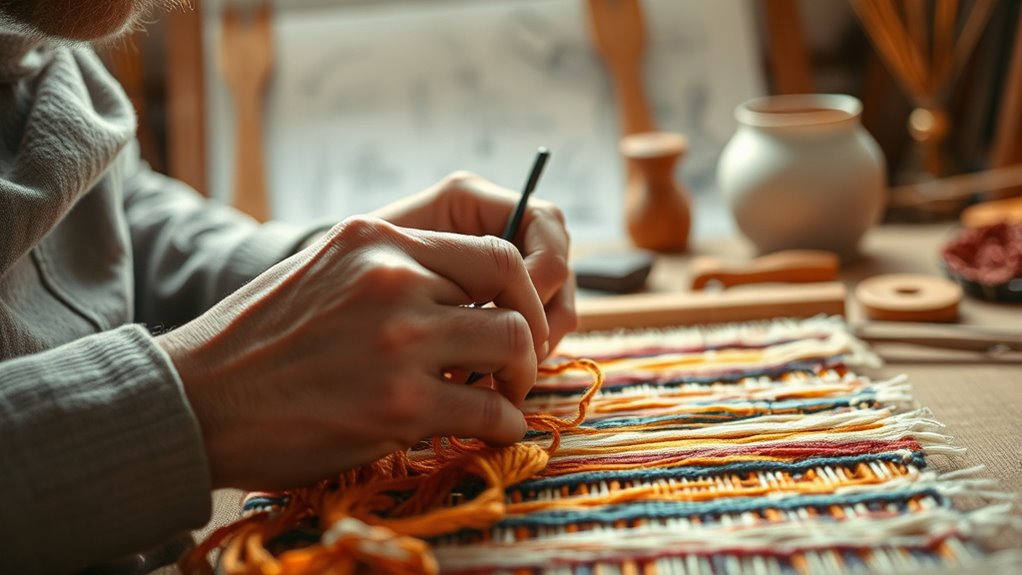
Crafting effective designs begins with placing people at the center of the process. When you focus on human needs, you create products that resonate on a deeper level, fostering genuine engagement. One of the key elements in achieving this is understanding how tactile feedback influences user experience. Tactile feedback isn’t just about making a device feel responsive; it’s about communicating trust, precision, and reliability through touch. When users press a button or swipe a screen and receive satisfying haptic responses, they instinctively feel more connected to the product. This physical interaction helps bridge the gap between digital and physical worlds, making the experience more intuitive and memorable. The sensation of tactile feedback also reassures users that their actions are registered, reducing frustration and building confidence in the design. As you craft these interactions, keep in mind that tactile feedback should be subtle yet discernible—enhancing usability without overwhelming the senses. Incorporating protective styling benefits can also improve user confidence by safeguarding the integrity of the design over time. Building on this, fostering an emotional connection through design is vital. When you design with empathy, you tap into users’ feelings and aspirations, creating a sense of trust and loyalty. Hand-crafted, human-centered designs excel because they consider the emotional nuances of user interactions. Every choice—from the texture of a material to the layout of an interface—can evoke specific feelings. For example, warm, natural textures may inspire comfort, while sleek, minimalist aesthetics communicate sophistication. By paying attention to these details, you help users feel understood and valued, transforming a simple tool into an extension of themselves. Emotional connection isn’t just about aesthetics; it’s about creating a story that resonates. When users see themselves reflected in your design, they develop a sense of ownership and attachment, which encourages continued use and positive word-of-mouth. To achieve this, focus on crafting moments of delight that surprise and satisfy. Personal touches, thoughtful details, and authentic craftsmanship all contribute to a sense of authenticity and care. Remember that hand-crafted elements—whether physical or digital—signal effort and attention, making users feel special. When you combine tactile feedback with emotional cues, you create a holistic experience that feels both natural and meaningful. This approach doesn’t just serve functional needs; it nurtures relationships between users and your product. Ultimately, human-centered design is about more than functionality; it’s about creating a dialogue—one where every touch, sight, and feeling contributes to a lasting emotional connection. And in doing so, your designs stand out in a crowded market, forging genuine bonds with those who use them.

Feedback Frequency Shifter, Professional Feedback Suppressor With Control Panel, Excellent Compatibility and Automatic Anti-howling, Accurately Suppress and Do Not Damage Sound Quality, for KTV
- Feedback Suppressor Technology: Five-stage parametric equalization and digital anti-howling
- Automatic Whistle Suppression: One-key quick suppression without manual adjustment
- Intelligent Audio Processing: Built-in digital chip for automatic noise scanning and suppression
As an affiliate, we earn on qualifying purchases.
As an affiliate, we earn on qualifying purchases.
Frequently Asked Questions
How Does Hand-Crafted Design Impact Scalability?
Hand-crafted design can limit scalability because scaling challenges often arise from the time-consuming nature of artisan collaboration. As you try to expand, maintaining the same level of craftsmanship becomes difficult, risking inconsistency and delays. While it emphasizes quality and uniqueness, you’ll need to balance artisan involvement with efficient processes to grow without compromising the human-centered approach. This careful management guarantees you preserve craftsmanship while overcoming scaling hurdles.
What Are the Cost Differences Between Handmade and Mass-Produced Products?
You might be surprised, but handmade products often cost more due to higher labor costs and meticulous craftsmanship. While mass-produced items benefit from economies of scale, enabling lower prices through efficient manufacturing, handcrafted goods demand pricing strategies that reflect their uniqueness and labor intensity. This cost difference creates an emotional connection, making each piece special. So, when valuing these products, remember, you’re paying for authenticity, artistry, and human touch.
How Can Small Artisans Compete With Large Manufacturers?
You can compete with large manufacturers by emphasizing your artisan branding and highlighting the unique, handcrafted quality of your products. Focus on local markets to build loyal customer relationships and create a personal connection. Use social media to showcase your craftsmanship and tell your story, making your products stand out. Offering customized options and sustainable practices also appeal to consumers seeking authentic, human-centered products, giving you a competitive edge.
What Materials Are Preferred in Human-Centered Hand-Crafted Design?
You’re choosing materials that truly make a difference, like natural fibers and eco-friendly dyes, which are the heart of human-centered design. These materials aren’t just sustainable; they connect you to tradition and authenticity. Natural fibers such as cotton, wool, and linen offer durability and comfort, while eco-friendly dyes enhance vibrancy without harming the environment. By prioritizing these, you create pieces that resonate deeply with your customers and stand the test of time.
How Is Sustainability Integrated Into Hand-Crafted Design Practices?
You integrate sustainability into your hand-crafted design practices by prioritizing sustainable material sourcing, ensuring your materials come from eco-friendly sources. You also focus on eco-friendly manufacturing processes that minimize waste and reduce environmental impact. By choosing renewable and biodegradable materials and adopting responsible production methods, you create products that are both beautiful and environmentally conscious, aligning your craftsmanship with a commitment to sustainability and long-term ecological health.

The Field Guide to Human-Centered Design
- Number of Design Methods: 57 clear-to-use methods
- Includes Case Studies: Real-world process examples
- Practice Worksheets: Hands-on exercises
As an affiliate, we earn on qualifying purchases.
As an affiliate, we earn on qualifying purchases.
Conclusion
By embracing hand-crafted, human-centered design, you guarantee your creations resonate deeply and stand out in this digital age. Remember, even in a world racing towards AI and automation, the timeless charm of craftsmanship remains irreplaceable—like a vintage typewriter in a sea of tablets. So, keep your focus on people, passion, and the art of making. After all, some things, like a perfectly crafted cup of coffee, are best appreciated when made with love and care.
empathy-driven interface accessories
As an affiliate, we earn on qualifying purchases.
As an affiliate, we earn on qualifying purchases.

Loofah Pads (Pack of 5) – Exfoliating Scrubbing Sponges – Natural Luffa Material – Essential Skin Care Product – for Shower/Bath – Fibrous Texture – Perfect for Face/Body Wash – Wet It and Apply Soap
- Number of Pads: Pack of 5 loofah pads
- Material: Natural luffa for exfoliation
- Size: 10 cm diameter each
As an affiliate, we earn on qualifying purchases.
As an affiliate, we earn on qualifying purchases.