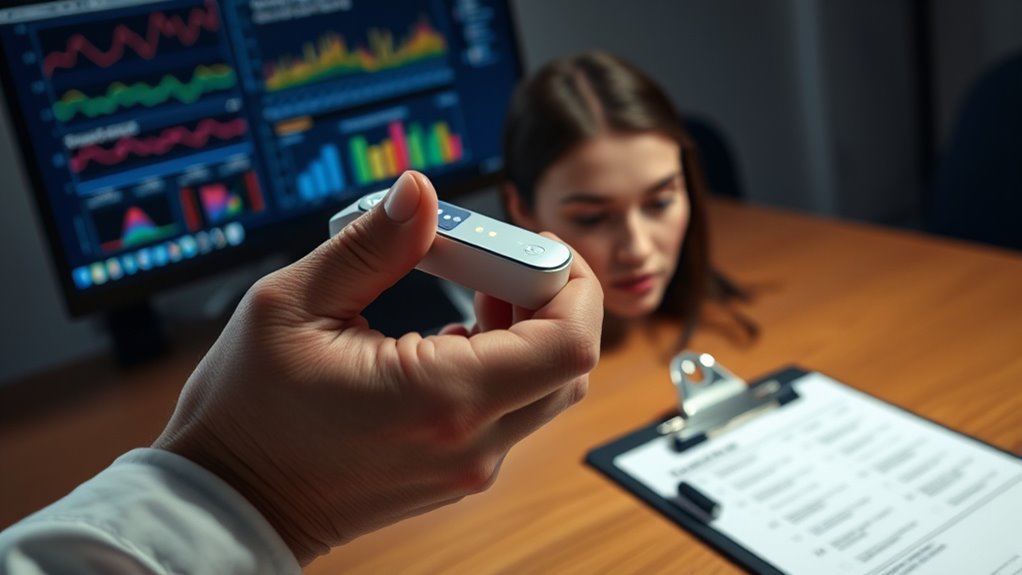

To measure your emotional responses, researchers combine biometric tools like fMRI scans, heart rate, skin conductance, and pupil dilation with your self-reported feelings. This integrated approach offers a holistic view of both subconscious reactions and conscious experiences. While physiological data reveals automatic responses, self-reports provide personal insights. If you’re curious about how these methods work together to uncover your emotional reactions, there’s more to explore about their applications and benefits.
Key Takeaways
- Biometric methods like neuroimaging and physiological signals provide objective data on emotional responses.
- Self-reports capture subjective feelings but may be biased or inaccurate.
- Combining neuroimaging with physiological data offers a comprehensive view of emotional reactions.
- Physiological signals such as heart rate and skin conductance serve as internal indicators of emotional arousal.
- Integrating both approaches enhances understanding of subconscious and conscious emotional processes.

Have you ever wondered how researchers determine what people truly feel in response to a stimulus? The answer lies in a combination of advanced neuroimaging techniques and the analysis of physiological signals. These methods allow scientists to peek beneath the surface of self-reports and observe the brain and body’s real-time reactions. Neuroimaging techniques, like fMRI or PET scans, reveal which areas of your brain activate when you experience certain emotions. By tracking blood flow or metabolic activity, researchers can identify patterns associated with feelings such as happiness, fear, or sadness. These images provide a detailed map of emotional processing, offering insights that words often can’t capture. Meanwhile, physiological signals—such as heart rate, skin conductance, or pupil dilation—serve as internal barometers of emotional intensity. When you feel anxious, your heart might race, or your palms might sweat; these automatic responses are measurable and quantifiable. Combining neuroimaging with physiological data creates an all-encompassing picture of emotional reactions, helping researchers determine not just what someone reports feeling, but what’s happening beneath conscious awareness. Additionally, the development of AI-driven analysis techniques enables the processing of large biometric datasets for more accurate interpretations.
You might think that self-report questionnaires or interviews are enough to gauge emotions, but they’re often limited by personal biases and memory inaccuracies. That’s why scientists rely heavily on biometric data for objectivity. For instance, if a person claims to feel calm during a specific stimulus, but their heart rate and skin conductance suggest heightened arousal, this discrepancy reveals hidden emotional responses. Neuroimaging adds another layer by pinpointing specific brain regions involved in those reactions, such as the amygdala for fear or the prefrontal cortex for regulation. These tools help uncover subconscious feelings that people might not recognize or admit to.
Using these techniques, researchers can also observe how emotions unfold over time, providing dynamic insights into emotional processes. For example, they can see how a person’s brain activity and physiological signals change from the moment they encounter a stimulus to after they’ve processed it. This real-time monitoring allows for a more accurate understanding of emotional responses than relying solely on retrospective self-reports. In brief, neuroimaging techniques and physiological signals work hand-in-hand to deepen our understanding of human emotion, offering a window into the complex interplay between mind and body. By analyzing these objective measures, scientists gain invaluable knowledge about emotional experiences, helping to improve mental health treatments, marketing strategies, and even user experience designs.

Scoliometer Meter Device 0-30° Measurement For Measuring Spinal Alignments Measure Spine
Our spine testing tool adopt acrylic, ensuring reliability and convenience. The user friendly display allows for easy reading…
As an affiliate, we earn on qualifying purchases.
As an affiliate, we earn on qualifying purchases.
Frequently Asked Questions
How Do Biometric Methods Compare in Accuracy to Self-Reports?
Biometric methods generally offer higher physiological accuracy than self-reports, capturing real-time emotional responses objectively. You might find self-reports more subjectively reliable, as they reflect your conscious feelings, but they can be biased or influenced by memory. Biometric tools bypass this bias, providing precise data on physiological changes. While both methods have strengths, combining them guarantees a thorough understanding of your emotional state, balancing subjective reliability with physiological accuracy.
What Are the Ethical Considerations in Emotional Biometric Research?
Imagine your emotions as a window you didn’t know was there. In biometric research, you might feel exposed, raising privacy concerns. You should guarantee informed consent, understanding how your data is collected and used. Ethical research balances scientific discovery with respect for your rights, avoiding manipulation or misuse. By protecting your privacy and obtaining clear consent, researchers can ethically explore emotions without crossing personal boundaries.
Can Biometric Responses Predict Long-Term Emotional Changes?
Biometric responses can help predict long-term emotional changes by providing insights into your emotional stability over time. While they offer valuable data, they aren’t foolproof for long-term prediction, as emotions are influenced by numerous factors. You should combine biometric analysis with other assessments to get a clearer picture of your emotional trajectory, ultimately aiding in understanding and improving your emotional stability for the future.
How Does Cultural Background Influence Biometric and Self-Reported Responses?
Your cultural background shapes how you express emotions and interpret responses. Cultural expression influences biometric signals and self-reports, as emotional norms vary across cultures. For example, some cultures encourage open emotional displays, affecting biometric readings and self-reported feelings, while others promote restraint. Understanding these differences helps you interpret emotional responses more accurately, recognizing that cultural context can markedly influence both biometric data and how you report your feelings.
What Are the Latest Technological Advancements in Emotion Measurement?
Think of emotion measurement tech as a window into your mind. You can now use neural imaging, which acts like a high-resolution camera for brain activity, and wearable sensors that track physiological signals in real-time. These advancements allow for more precise, immediate insights into your emotional state, making responses more accurate and less subjective. As technology evolves, you’ll experience a deeper understanding of your feelings than ever before.

SpinPower Heart Rate Monitor Conductive Gel, 5-Ounce
As an affiliate, we earn on qualifying purchases.
As an affiliate, we earn on qualifying purchases.
Conclusion
By combining biometric and self-reported methods, you gain a fuller picture of emotional responses. Imagine you’re testing a new ad campaign and notice viewers’ heart rates spike while their self-reports remain neutral. This discrepancy reveals hidden reactions you might miss otherwise. Using both approaches helps you understand true emotional engagement, guiding better decisions. So, next time you’re measuring feelings, remember: blending methods uncovers insights that alone might stay hidden.
fMRI brain scan at home
As an affiliate, we earn on qualifying purchases.
As an affiliate, we earn on qualifying purchases.
pupil dilation tracking device
As an affiliate, we earn on qualifying purchases.
As an affiliate, we earn on qualifying purchases.