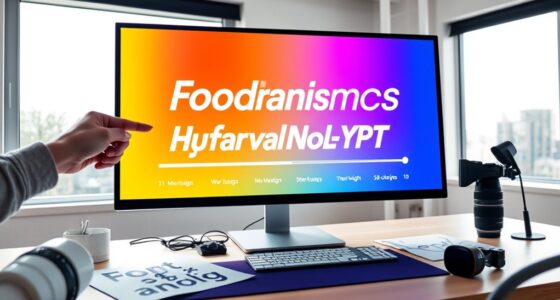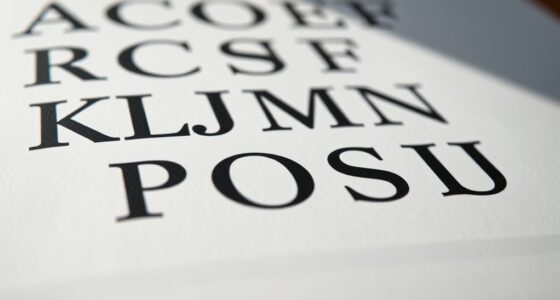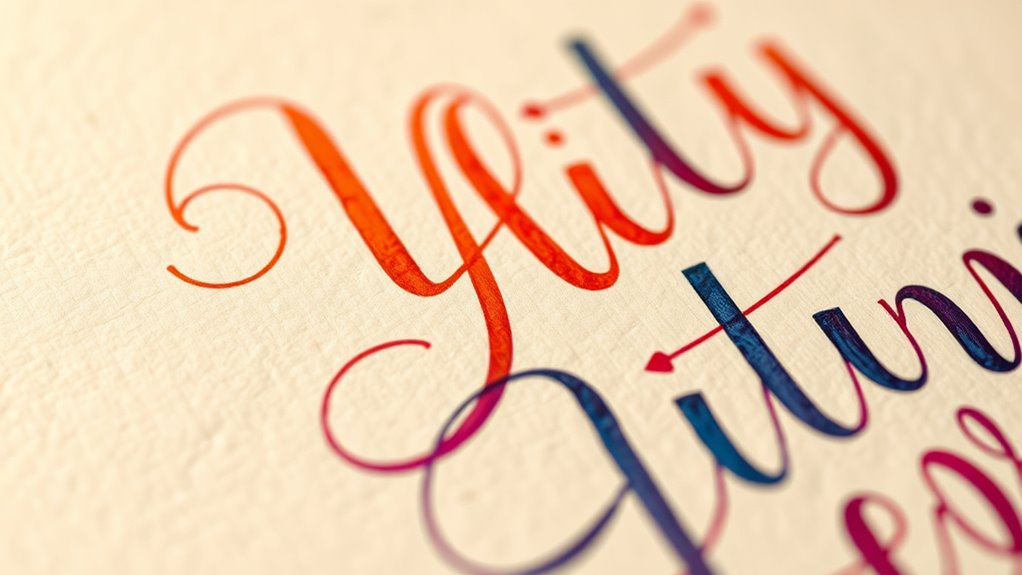
To excel in hand lettering and custom type design, you should explore their rich history and experiment with various tools like pencils, brushes, and digital software. Developing your personal style involves understanding traditional letterforms and blending them with modern influences. Practice regularly to refine your skills and create versatile, expressive work for logos, murals, or branding. Keep exploring different techniques—more insights are waiting to help you elevate your craft even further.
Key Takeaways
- Mastering traditional and digital tools enhances control and creativity in hand lettering and custom type design.
- Studying typography history informs stylistic choices and helps develop a unique personal style.
- Experimentation with different tools and techniques creates diverse textures and visual effects.
- Hand lettering adds personality and emotion, suitable for branding, logos, and artistic projects.
- Continuous learning and practice refine skills, blending historical influences with contemporary design trends.
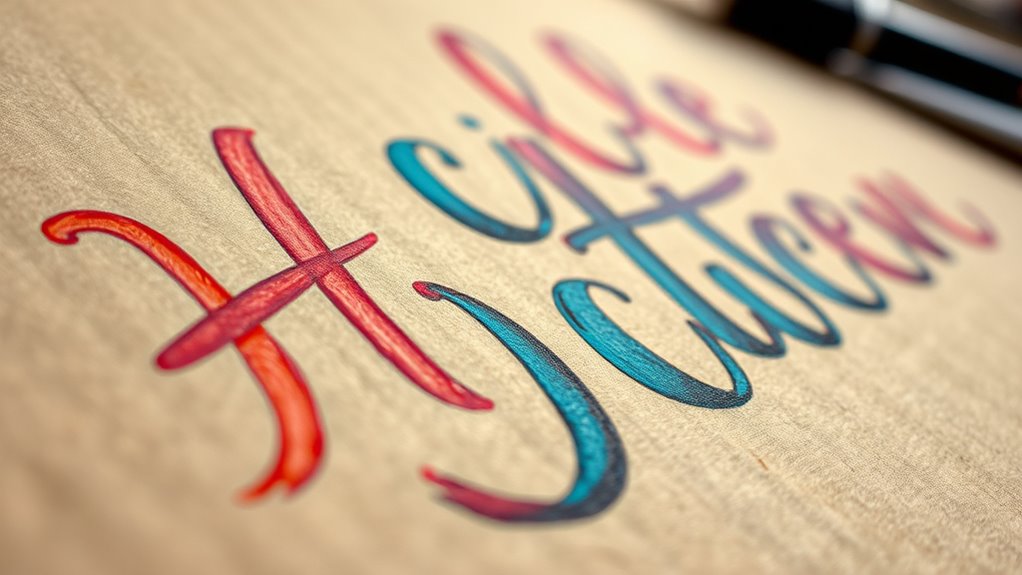
Hand lettering and custom type design are creative skills that allow you to craft unique, expressive visuals for any project. When you dive into this craft, understanding typography history can deepen your appreciation and inform your style. Typography history traces back centuries, from ancient inscriptions to modern digital fonts. This rich background shows how letterforms have evolved, influenced by cultural shifts, technological advances, and artistic movements. By studying this history, you can see how different eras shaped lettering styles and learn what makes certain letterforms timeless or trendy. It also helps you develop your own voice in the design world, blending traditional influences with contemporary flair. Gaining knowledge of typography history can inspire your creativity and provide context for your work. To get started, you’ll need the right lettering tools. These include simple items like pencils, erasers, and paper, but also more specialized tools such as brush pens, nibs, and inks. Digital tools like tablets and design software have expanded your options, enabling precise control and endless customization. Choosing quality tools makes a difference; for example, a good brush pen can mimic the fluidity of traditional calligraphy, while sharp nibs help craft intricate, detailed letterforms. As you experiment, you’ll learn how each tool affects your work, allowing you to develop a style that’s both fluid and controlled. Mastering these tools is essential because it gives you the versatility to create everything from bold headlines to delicate scripts. Your understanding of typography history and mastery of lettering tools will influence your approach to creating custom type. You can draw inspiration from historical letterforms, adapting them to modern needs or pushing boundaries for a more experimental look. Whether you’re designing a logo, creating a mural, or developing a branding identity, these foundational elements are key. Hand lettering involves more than just forming letters; it’s about expressing emotion, personality, and message through your strokes. As you practice, you’ll notice how different tools allow for various textures and effects, which can make your lettering more dynamic and visually appealing. Ultimately, mastering hand lettering and custom type design is about blending the historical context with your creativity and technical skills. It’s a process of continuous learning—studying past styles, experimenting with tools, and refining your craft. With dedication, you’ll develop a unique style that communicates effectively and stands out. Whether you’re inspired by the elegance of old calligraphy or the boldness of modern typography, your journey begins with understanding the roots and tools of lettering, empowering you to craft visuals that truly resonate.
Top picks for "hand letter custom"
Open Amazon search results for this keyword.
As an affiliate, we earn on qualifying purchases.
Frequently Asked Questions
What Software Tools Are Best for Digital Hand Lettering?
You should try using vector software like Adobe Illustrator for digital hand lettering, as it allows you to create clean, scalable designs. Pair this with a drawing tablet and brush pens for authentic strokes, then trace or refine your work digitally. Other great options include Procreate on the iPad, which offers natural brush pen effects, and Affinity Designer, providing a cost-effective alternative for detailed, custom lettering.
How Do I Choose the Right Style for My Project?
To choose the right style for your project, start by considering your target audience and the mood you want to convey. Look at font pairing options that complement your message, and select color schemes that enhance readability and impact. Experiment with different styles to see what resonates, and don’t be afraid to combine elements for a unique look. Ultimately, your style should reflect your project’s purpose and personality.
What Are Common Mistakes to Avoid in Custom Type Design?
You should avoid inconsistent stroke thickness and poor letter spacing, as these mistakes can make your type look unprofessional. Keep stroke consistency throughout your design, ensuring lines flow smoothly. Pay attention to letter spacing, making sure it’s even and balanced; tight or loose spacing can disrupt readability. Also, steer clear of overly decorative elements that distract from clarity. Focusing on these details helps create a polished, effective custom type.
How Can I Improve My Lettering Skills Quickly?
To improve your lettering skills quickly, practice consistently and set aside dedicated time each day. Study classic letterforms to understand their structure and style, then try replicating them to build your skills. Focus on maintaining steady strokes and clean lines, and don’t be afraid to experiment with different styles. Regular practice and learning from the masters will accelerate your progress and help you develop a strong, confident hand.
What Are the Latest Trends in Hand Lettering and Custom Typography?
You should explore the latest lettering inspiration from social media platforms like Instagram and Pinterest, where artists showcase innovative styles. Keep an eye on the typography evolution, noticing how bold, expressive letterforms and mixed media are trending. Incorporate these trends into your work by experimenting with dynamic compositions and unique textures. Staying updated and inspired will help you develop fresh, modern lettering that resonates with current design movements.
Conclusion
Remember, practice makes perfect. By exploring hand lettering and custom type design, you open your creative potential and add a personal touch to every project. Don’t be afraid to experiment and refine your skills—each mistake is a step closer to mastery. Embrace the process and trust that, with time, your unique style will shine through. As the saying goes, “Rome wasn’t built in a day,” so stay patient and keep lettering your way to greatness.