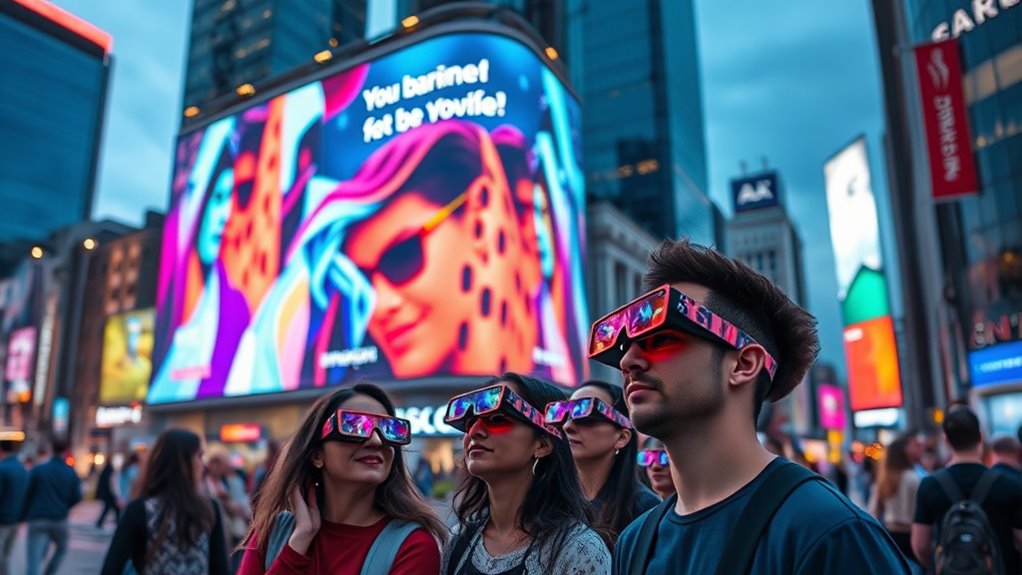

In 2025, dynamic branding and personalization will revolutionize your customer experience by using AI-driven analytics to understand preferences and behaviors in real-time. You’ll see tailored content and immersive journeys that adapt seamlessly to each interaction, whether online or in-store. These customized experiences help deepen brand loyalty and make every touchpoint engaging. If you keep exploring, you’ll discover how innovative technologies will shape the future of personalized engagement even further.
Key Takeaways
- AI-driven analytics enable brands to deliver highly personalized experiences by understanding individual preferences and behaviors in real-time.
- Immersive customer journeys adapt seamlessly to interactions, offering relevant recommendations and conversational engagement.
- Brands use dynamic storytelling to foster loyalty, with ongoing inputs shaping tailored content and offers.
- Physical spaces are customized through smart technologies, creating engaging in-store environments aligned with customer preferences.
- Real-time data analysis is essential for instant, adaptive personalization, making tailored experiences a standard by 2025.

Have you ever wondered how brands seem to know exactly what you want and deliver personalized experiences that feel tailor-made? The secret lies in how they leverage AI-driven analytics to truly understand your preferences, behaviors, and needs. By analyzing vast amounts of data in real-time, brands can craft immersive customer journeys that seamlessly adapt to your interactions. This technology allows companies to predict your next move, suggest products or services you’re likely to enjoy, and create a sense of connection that feels almost intuitive. Instead of generic marketing blasts, you’re met with content and offers that resonate on a personal level, making every engagement feel uniquely suited to you.
In 2025, this level of personalization isn’t just a nice touch; it’s fundamental to brand strategy. AI-driven analytics continuously gather insights from your browsing habits, purchase history, social media activity, and even offline interactions. These insights are then used to tailor messaging and experiences, ensuring that each touchpoint is relevant and engaging. The result is an immersive customer journey that feels like a conversation rather than a one-sided sales pitch. You might start browsing a product, only to see personalized recommendations pop up, highlighting options based on your preferences. Or, during a customer service chat, the system already knows your previous issues and preferences, making support faster and more effective.
This sophisticated approach transforms how brands build loyalty. Instead of relying on one-size-fits-all campaigns, they craft dynamic narratives that evolve with your behavior. As you interact more, the brand’s understanding deepens, enabling even more precise personalization. This creates a loop where your inputs directly influence future interactions, reinforcing your connection to the brand. Additionally, immersive customer journeys aren’t limited to digital touchpoints. They extend into physical spaces, with smart stores and personalized in-store experiences that respond to your presence. Think of a retail environment that adjusts lighting, displays, or even music based on your preferences, making shopping feel engaging and unique every time.
Ultimately, the integration of AI-driven analytics and immersive customer journeys puts you in the center. You’re no longer just a target audience; you’re a participant in a tailored experience that evolves with you. Brands that master this approach can foster deeper loyalty and create lasting relationships. In 2025, personalization is no longer a luxury but a standard, driven by technology that makes every interaction feel thoughtfully crafted just for you. A key enabler of this transformation is the real-time data analysis, which allows brands to respond instantaneously to your changing needs and preferences.
Top picks for "dynamic brand personalization"
Open Amazon search results for this keyword.
As an affiliate, we earn on qualifying purchases.
Frequently Asked Questions
How Will Privacy Concerns Impact Personalization Strategies in 2025?
Privacy concerns will heavily influence your personalization strategies in 2025. You’ll need to prioritize data privacy by being transparent with users about how you collect and use their data. Securing user consent becomes essential, ensuring users feel confident sharing information. This approach not only builds trust but also helps you comply with evolving regulations, so your personalized experiences remain effective without compromising user privacy.
What Role Will AI Play in Real-Time Brand Personalization?
Imagine AI customization and real-time engagement working together like a well-oiled machine. You’ll see AI play a pivotal role in brand personalization by instantly analyzing data to deliver tailored experiences. It actively adjusts content to your preferences, creating seamless interactions. This dynamic approach ensures your brand stays relevant and engaging, making every customer feel uniquely valued while you stay ahead with innovative, real-time personalization powered by AI.
How Can Small Businesses Implement Dynamic Branding Effectively?
You can implement dynamic branding effectively by maintaining brand consistency across all channels while using storytelling techniques that resonate with your audience. Personalize experiences by leveraging customer data to tailor messages, offers, and visuals. Use adaptable content that adjusts in real-time, ensuring your brand feels authentic and engaging. Focus on clear, compelling stories, and use automation tools to streamline customization, making your brand memorable and relevant to each customer.
What Are the Ethical Considerations in Personalized Marketing?
You might think personalized marketing’s all about better targeting, but ethical issues like data bias and consent challenges lurk beneath. Ignoring these can erode trust faster than you think. Always guarantee transparency and respect user privacy, asking for clear consent and addressing data bias head-on. Ironically, the better you handle ethics, the more loyal your audience becomes—proving that integrity truly is good business.
How Will Consumer Behavior Influence Future Personalization Trends?
Your understanding of consumer psychology and purchase motivations will shape future personalization trends. As you analyze how consumers respond to tailored experiences, you’ll notice they crave relevance and authenticity. By studying behaviors and motivations, you’ll create more intuitive, personalized interactions that resonate deeply. This will lead you to refine your strategies, ensuring they align with evolving consumer expectations, ultimately driving engagement and loyalty in an increasingly personalized marketplace.
Conclusion
As you navigate the future of branding, imagine your customers stepping into a world where every interaction feels like it’s crafted just for them—like a personalized map guiding their journey. With dynamic branding and personalization, you paint a vivid landscape where experiences shift seamlessly around individual needs. Embrace this evolution, and watch your brand become a beacon of connection, glowing brightly in a sea of sameness—where every touchpoint feels as unique as the person on the other side.