AR and VR design experiences go far beyond just screens by creating immersive environments that engage your senses and make you feel part of the digital world. Through tactile feedback, spatial storytelling, and environments that respond to your movements, these experiences make interactions more natural and memorable. They transform passive viewing into active exploration, opening exciting possibilities for storytelling, learning, and entertainment. If you’re curious about how these immersive designs take experiences to the next level, there’s more to explore below.
Key Takeaways
- Immersive AR and VR design transforms environments to foster deep user presence and engagement beyond traditional screens.
- Incorporating haptic feedback enhances tactile sensations, making virtual interactions feel tangible and realistic.
- Spatial storytelling leverages 3D environments and object placement to create interactive, participatory narratives.
- Manipulating spatial relationships emphasizes scale, depth, and natural movement, enriching user experience.
- Combining visual, tactile, and spatial elements elevates AR/VR to immersive environments for education, entertainment, and storytelling.
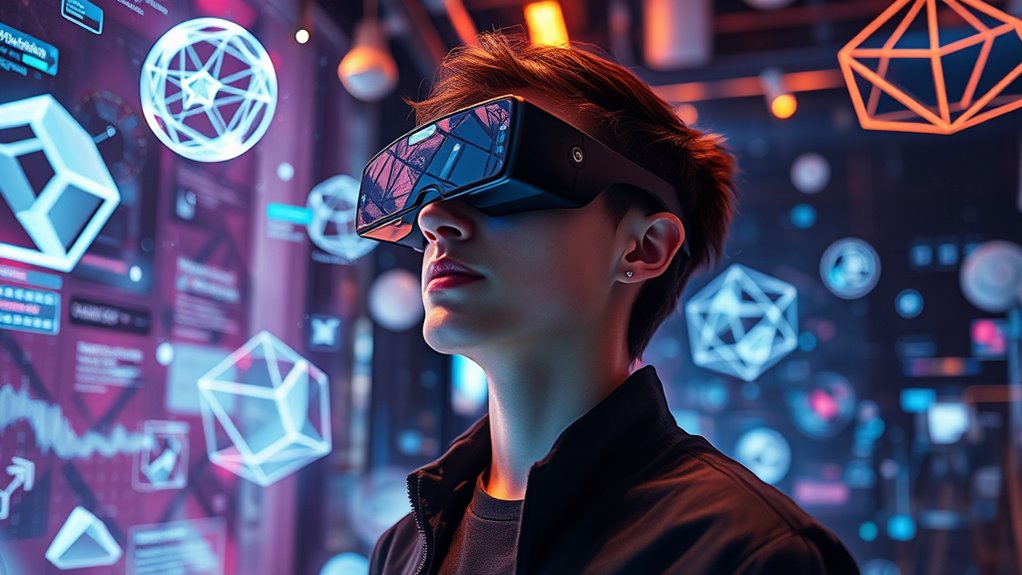
Augmented Reality (AR) and Virtual Reality (VR) are transforming how designers create immersive experiences that captivate users. These technologies go beyond traditional screens, allowing you to craft environments where users feel truly present. One key aspect of this immersion is haptic feedback, which enhances the sense of touch within digital spaces. When you integrate haptic feedback into your VR or AR experiences, users can feel vibrations, textures, or resistance, making interactions more tangible and realistic. For example, when someone picks up a virtual object, they might feel a subtle click or resistance, reinforcing the sensation that they’re handling something real. This sensory input bridges the gap between the virtual and physical worlds, heightening engagement and emotional connection. Incorporating high-fiber content can also influence how users perceive and interact with virtual environments, especially when designing health-related or wellness experiences. Spatial storytelling takes center stage in AR and VR design, enabling you to craft narratives that unfold around the user in three-dimensional space. Unlike traditional storytelling, where the narrative is confined to a linear screen or page, spatial storytelling immerses users in a dynamic environment. You can position characters, objects, and clues in specific locations, guiding users through a story by their movement and perspective. This approach makes the experience more interactive and personalized, as users actively explore and piece together the narrative at their own pace. By leveraging spatial storytelling, you turn passive viewers into active participants, deepening their emotional investment and creating memorable, impactful experiences.
Haptic feedback in AR and VR creates realistic, engaging interactions that make digital environments feel tangible and immersive.
In designing for AR and VR, you also have the opportunity to manipulate spatial relationships, creating a sense of scale and depth that’s impossible on flat screens. When users move through a space, they’re not just observing—they’re engaging with elements that respond to their presence. You can use haptic feedback to emphasize important moments or guide attention, making certain objects feel more significant or tangible. The key is to think in three dimensions, designing interactions that feel natural and intuitive. When done well, this approach allows you to craft experiences that are not only visually stunning but also emotionally resonant, as users feel like they’re genuinely part of the story. Ultimately, by harnessing haptic feedback and spatial storytelling, you elevate your AR and VR designs from simple visual experiences to fully immersive journeys. This shift transforms passive observation into active participation, opening new horizons for storytelling, education, and entertainment. You have the power to create environments where users don’t just look but feel and explore, making every interaction meaningful and memorable.
Frequently Asked Questions
How Do AR and VR Impact User Safety During Experiences?
AR and VR impact your safety by requiring you to stay aware of your physical surroundings to avoid accidents. They help protect your physical safety through design features like boundary warnings, but you must remain cautious. Privacy concerns also arise, as these experiences often collect personal data. Always review privacy settings and be mindful of your environment to enjoy immersive experiences safely while safeguarding your privacy.
What Hardware Considerations ARe Critical for Effective AR and VR Design?
Your hardware choices are vital; neglecting them could turn your experience into chaos. Prioritize hardware ergonomics to guarantee comfort during extended use and select high display resolution for crisp visuals that immerse users fully. These considerations prevent discomfort and visual fatigue, making your AR or VR experience seamless and engaging. Invest wisely in ergonomic design and sharp visuals, or risk creating an experience that’s as unbearable as it is unforgettable.
How Can Designers Ensure Accessibility in Immersive Environments?
To guarantee accessibility in immersive environments, you should prioritize inclusive design that considers user diversity. Incorporate adjustable settings for visual, auditory, and motion sensitivities, and provide alternative interaction methods. Test your experiences with diverse users to identify barriers and make necessary adjustments. By focusing on inclusivity, you create a more welcoming environment that accommodates everyone, ensuring a richer, more engaging experience for all users.
What ARe the Best Practices for User Onboarding in AR and VR?
When onboarding users in AR and VR, you should focus on clear tutorials that incorporate gesture recognition and spatial guidance. Guide users step-by-step, allowing them to practice gestures in a safe environment. Use visual cues and simple instructions to help them become comfortable with the immersive space. Keep onboarding concise yet thorough, ensuring users feel confident navigating and interacting without feeling overwhelmed.
How Do AR and VR Influence User Emotional Engagement?
Ever wonder how AR and VR make you feel more connected? They heighten emotional resonance by creating immersive experiences that tap into your senses and emotions. The deeper the immersion, the stronger your emotional engagement becomes, making moments feel real and memorable. These technologies evoke empathy and excitement, transforming passive viewers into active participants. Isn’t that what makes AR and VR powerful tools for connecting with users on a personal level?
Conclusion
As you explore AR and VR design experiences, it’s clear they’re more than just new visuals—they’re transforming how we connect, learn, and feel. Some say these technologies will replace traditional screens entirely, but that’s not the whole truth. They’re tools to deepen human connection and understanding. Embrace the possibility that these immersive designs don’t just extend screens—they extend your capacity for empathy, creativity, and experience in ways you’ve never imagined.