To select the appropriate font management software, focus on compatibility with your operating system and design tools like Adobe or Microsoft Office. Prioritize features such as easy organization, font previewing, activation/deactivation controls, and cloud sync for seamless multi-device access. A user-friendly interface helps you navigate your font library quickly, boosting productivity. Considering these factors guarantees smooth workflow and better creativity—keep exploring further to find the perfect fit for your needs.
Key Takeaways
- Ensure software compatibility with your operating system and design tools like Adobe Creative Suite or Microsoft Office.
- Prioritize features such as font activation/deactivation, preview, and cloud sync for efficient workflow management.
- Choose a user-friendly interface that simplifies font organization, previewing, and quick access.
- Consider additional features like tagging, categorization, and multi-device support to enhance font library accessibility.
- Test trial versions to evaluate software performance and integration within your existing design or development workflow.
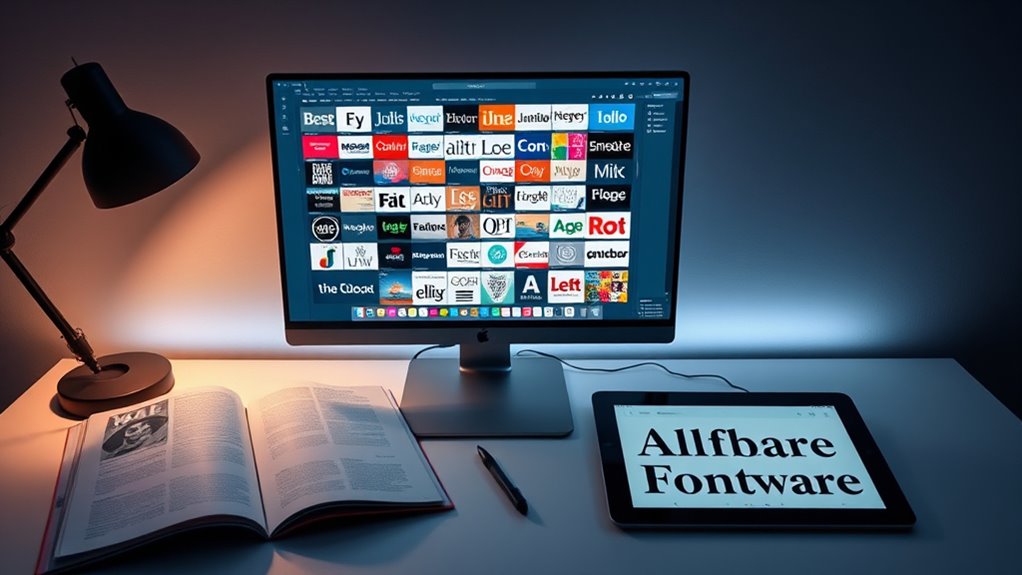
Are you overwhelmed by the sheer number of fonts available and unsure which management software best suits your needs? You’re not alone. With thousands of fonts out there, organizing them efficiently can feel like an uphill battle. That’s where choosing the right font management software becomes vital. The key is to find a tool that simplifies font organization, allowing you to access, preview, and activate fonts effortlessly. A good font manager should let you categorize fonts into collections or tags, making it easier to locate the perfect typeface for any project. Whether you’re working on graphic design, web development, or document creation, having a well-organized font library saves time and boosts productivity.
An organized font library boosts productivity and simplifies design workflow.
When evaluating options, consider software compatibility as a top priority. Not all font management tools work seamlessly across different operating systems or integrate with the software you already use. For example, if you’re on Windows, you’ll want a program that plays nicely with Adobe Creative Suite or Microsoft Office. Mac users should look for software that integrates smoothly with programs like Photoshop or Illustrator. Cross-platform compatibility is also worth considering if you work across multiple devices or share fonts with team members. Compatibility issues can cause headaches, so double-check whether the font management software supports your operating system and the specific applications you rely on daily.
Another important aspect is how the software handles font activation and deactivation. You want a tool that allows you to toggle fonts on and off without disrupting your workflow. This flexibility helps prevent system slowdowns and reduces clutter, especially if you have a large font library. Additionally, look for features like font previewing within the manager, so you can see how a font looks before activating it. This saves time and helps you make better design choices quickly. Some programs even offer auto-activation or synchronization with cloud services, making it easier to access your fonts from multiple devices. Furthermore, understanding the impact of font choice on visual clarity and readability can significantly influence your project’s success.
Finally, consider the user interface. You want something intuitive that doesn’t require a steep learning curve. A cluttered or complicated interface can hinder your efficiency rather than enhance it. Many font management softwares offer trial versions—take advantage of these to test how well they fit your workflow. Remember, the right tool should not only organize your fonts but also streamline your entire design process. By focusing on font organization and software compatibility, you’ll be able to select a solution that enhances your creativity and keeps your font library manageable.
Frequently Asked Questions
Can Font Management Software Improve Collaboration Among Team Members?
Yes, font management software can improve team collaboration by streamlining access to shared fonts, making it easier to maintain consistent branding. It helps you organize and distribute fonts efficiently, enhancing creative workflows. When everyone has quick access to the right fonts, your team can work more cohesively, reduce errors, and save time. This fosters better communication and coordination, ultimately boosting overall productivity and ensuring your projects stay on-brand.
How Does Font Licensing Work Within Font Management Applications?
Font licensing in management apps is like having a magic key that unlocks access to fonts legally. You hold licenses that specify how you can use each font, whether for personal projects or commercial work. These apps help enforce licenses, preventing misuse or unauthorized sharing. They track your font usage, ensuring you stay compliant, so you avoid costly legal issues and keep your creative flow uninterrupted.
Is Font Management Software Compatible With Both Windows and Mac?
Yes, font management software is often compatible with both Windows and Mac, offering cross-platform compatibility. You can easily organize and access your fonts regardless of the operating system you’re using. Most of these applications support a wide range of font formats like TrueType and OpenType, ensuring seamless integration across platforms. This flexibility makes it simple to manage your font library efficiently, whether you’re on Windows or Mac.
What Security Features Are Included in Font Management Tools?
You’ll find that font management tools include essential security features like font encryption, which protects your fonts from unauthorized access, and access controls that let you set permissions for different users. These features guarantee your fonts stay secure while maintaining easy access for authorized users. By leveraging font encryption and access controls, you can safeguard your font library and prevent unauthorized modifications or distribution, keeping your projects safe and professional.
Can Font Management Software Handle Custom or Proprietary Font Formats?
Yes, font management software can handle custom and proprietary font formats. You’ll want to look for tools that offer robust custom font support and proprietary format compatibility, ensuring seamless integration of unique fonts into your workflow. These programs allow you to organize, preview, and activate your custom fonts efficiently, saving you time and effort. Make sure the software explicitly states support for your specific font formats to avoid any compatibility issues.
Conclusion
In the end, choosing the right font management software is like finding the perfect pair of shoes—you want comfort, style, and reliability all in one. Think about your needs, try out options, and trust your instincts—after all, the right tool makes your creative journey smoother. Don’t settle for less; your fonts deserve a home that’s organized and inspiring. Remember, the right software isn’t just a choice—it’s the key to liberating your full design potential.