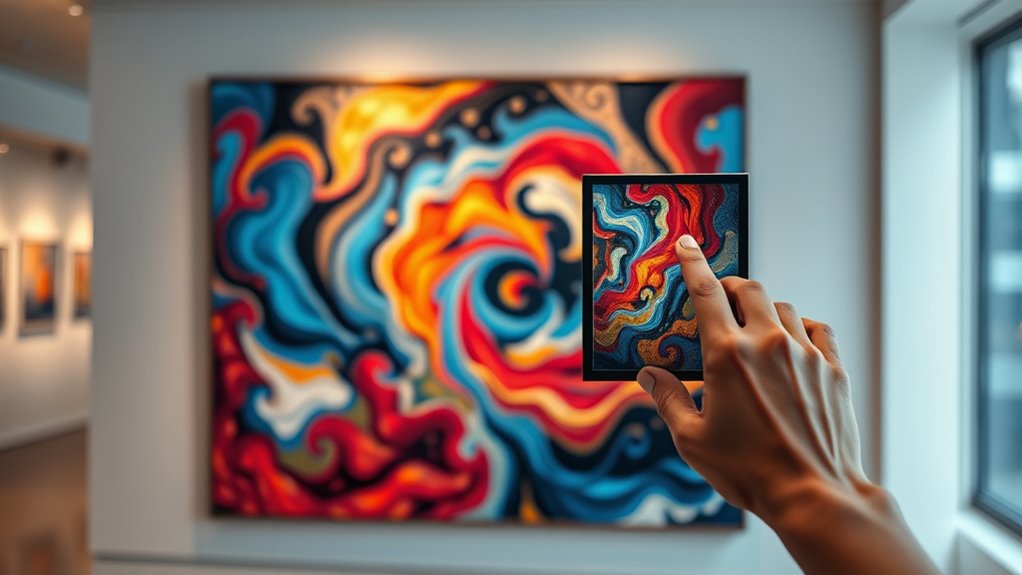

When it comes to AI-generated art and copyright, human authorship matters most when you actively contribute creative input, make meaningful decisions, or exercise skill during the process. If your role is simply prompt input or minimal interaction, the legal rights may stay with the AI developer or platform owner. To truly establish your rights, your involvement needs to reflect intentional artistic effort. Exploring the nuances can help you understand when your contribution qualifies for copyright protection.
Key Takeaways
- Human input or creative choices during AI art creation strengthen claims of authorship and copyright protection.
- Current laws prioritize human originality, making AI-generated works without human input unlikely to qualify for copyright.
- Significant human involvement, such as prompt design or curation, can establish legal rights to AI-generated art.
- Without clear human contribution, rights typically default to AI developers or platform owners.
- Evolving legal frameworks aim to clarify when human authorship suffices for copyright in AI-generated works.

As artificial intelligence continues to transform creative industries, the question of copyright ownership for AI-generated art has become increasingly urgent. You might wonder, who owns the rights to a piece created by an algorithm? This query touches on complex legal implications, especially when it comes to defining artistic originality. Traditional copyright laws are built around the idea of human authorship, requiring a creative spark that results from a person’s skill, judgment, and effort. But when a machine produces art autonomously, it challenges this notion. Courts and lawmakers are now grappling with whether AI-generated works qualify for copyright protection and, if so, who holds that copyright—the programmer, the user, or perhaps no one at all.
AI art ownership raises complex legal questions about authorship and originality.
In examining the legal implications, you realize that current laws are not fully equipped to handle these new realities. Many jurisdictions specify that copyright can only be granted to works created by a human author. This means that, technically, AI alone cannot hold copyright, leaving questions about the rights of those who develop or use AI tools. For instance, if you input prompts into an AI system and receive a piece of art, you might assume you’re the creator, but legally, the AI’s output may not be considered your original work. Instead, the rights could revert to the developer of the AI or the entity that owns the platform, complicating ownership rights and licensing.
Furthermore, the concept of artistic originality comes into sharp focus here. You need to assure whether an AI-generated work possesses the same level of originality required by law. Artistic originality typically involves a human element—intent, creativity, and personal expression—that courts recognize as essential for copyright protection. When an AI produces art based on algorithms and training data, it lacks conscious intent, which raises questions about whether the output can truly be considered original in the legal sense. Without human input, many argue that AI art fails to meet the threshold of originality, potentially disqualifying it from copyright altogether.
However, if you contribute significant input or make creative choices during the AI process, you might establish a claim of authorship rooted in your human contribution. This blurs the line between machine and human involvement, emphasizing that the legal recognition of AI art hinges on the degree of human originality embedded in the process. As the legal landscape evolves, understanding these distinctions becomes crucial to protect your rights and ensure that AI-generated art is properly attributed. Additionally, the role of technological advancements in shaping copyright law underscores the importance of adapting legal frameworks to accommodate new forms of creativity. Ultimately, recognizing where human authorship matters helps to safeguard artistic originality amid technological advances.

Sora 2 Storytelling for Creators: AI Video Guide to Prompts, Editing, and Monetization with Creative Tools to Inspire, Connect, and Succeed
As an affiliate, we earn on qualifying purchases.
As an affiliate, we earn on qualifying purchases.
Frequently Asked Questions
Can Ai-Generated Art Be Patented?
You can’t patent AI-generated art because patent laws require human creative attribution, and AI lacks that. The patent implications focus on who created the work, so if a human designed or directed the AI, they might seek patent protection for that process or invention. Without human authorship, AI-generated art typically isn’t eligible for patents, as the law emphasizes human creative input and originality in the patent application.
How Do Licensing Laws Apply to Ai-Created Works?
Licensing laws for AI-created works depend on human oversight and AI training. You need to guarantee that any AI-generated art complies with existing copyright rules, especially if humans contributed significant creative input. When licensing, clarify whether the work was primarily driven by AI or human authorship, as this impacts rights and permissions. Responsible licensing requires understanding how AI training data and human oversight influence the originality and legal status of the work.
Who Holds Copyright if AI Modifies Existing Art?
In the age of AI, if it modifies existing art, you hold the copyright only if you provided significant authorship and creative input. Without clear authorship clarity, the AI’s role may render the work a derivative piece, affecting derivative rights. Think of it as a digital Da Vinci—your contributions determine ownership, not the AI’s. You must demonstrate your creative influence to secure copyright and control over the modified work.
Are There Ethical Concerns With AI Art Ownership?
Yes, there are ethical concerns with AI art ownership. You might question if AI truly demonstrates authentic creativity or if it diminishes human contribution. The moral implications involve whether creators get proper recognition and compensation, especially when AI generates works inspired by human artists. These issues challenge the integrity of artistic value, prompting you to think about how to fairly assign ownership and respect the original human effort behind AI-generated art.
How Do International Copyright Laws Differ for AI Art?
International copyright laws differ dramatically for AI art, depending on legal jurisdiction. You’ll find some countries embracing artificial creativity, granting rights based on the AI’s human creator, while others strictly scrutinize the source of originality. Jurisdiction determines whether AI-generated artworks qualify for copyright protection or fall into public domain. You need to navigate nuanced legal nuances, noting that different jurisdictions prioritize human authorship and ownership, affecting how AI art is protected globally.
Digital Curation in the Data Age: A Multidisciplinary and International Exploration
As an affiliate, we earn on qualifying purchases.
As an affiliate, we earn on qualifying purchases.
Conclusion
As AI continues to create stunning art, you might wonder if human creativity still holds sway. Does the artist’s intention matter in a world flooded with machine-generated images? Ultimately, human authorship adds depth, emotion, and originality that AI can’t replicate. While technology evolves, your unique perspective and purpose remain essential. So, will you let machines define art, or will you guarantee your voice stays central in this creative revolution? The choice is yours.

The AI-Powered Hit Factory:: Blueprint for creating, Copyrighting, And Monetizing AI-Generated Music and Video
As an affiliate, we earn on qualifying purchases.
As an affiliate, we earn on qualifying purchases.

Generative AI Basics & Beyond: Learn Effective Prompt Engineering Quickly & Easily to Harness the Power of Tools Like ChatGPT for Productivity, Career Success, & Creativity—Even If You're a Beginner
As an affiliate, we earn on qualifying purchases.
As an affiliate, we earn on qualifying purchases.