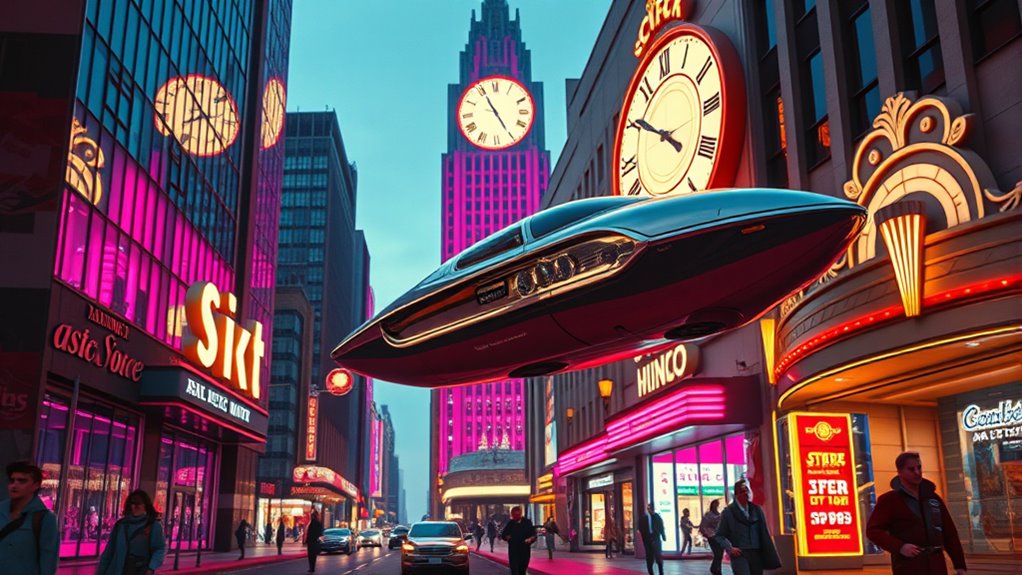

Retro-futurism combines nostalgic visions of the past with innovative ideas inspired by earlier eras, blending vintage aesthetics like chrome surfaces and bold shapes with futuristic optimism. This style reflects hope in technology’s potential to improve lives and celebrates design elements from the mid-20th century. It encourages you to see the future through a lens of creativity and possibility, showing how past dreams influence modern innovation. Keep exploring to discover how this inspiring trend shapes our world today.
Key Takeaways
- Retro-futurism blends vintage aesthetics like chrome and geometric shapes with futuristic concepts to evoke nostalgia and optimism.
- It celebrates technological progress through charming, streamlined designs inspired by mid-century modern and 1950s styles.
- The movement inspires contemporary innovation by encouraging “what if” thinking using nostalgic design elements.
- It links past visions of the future with current creativity, demonstrating how history fuels imaginative progress.
- Retro-futurism serves as a reminder that technological hope and beauty can coexist, inspiring new ideas rooted in nostalgic optimism.
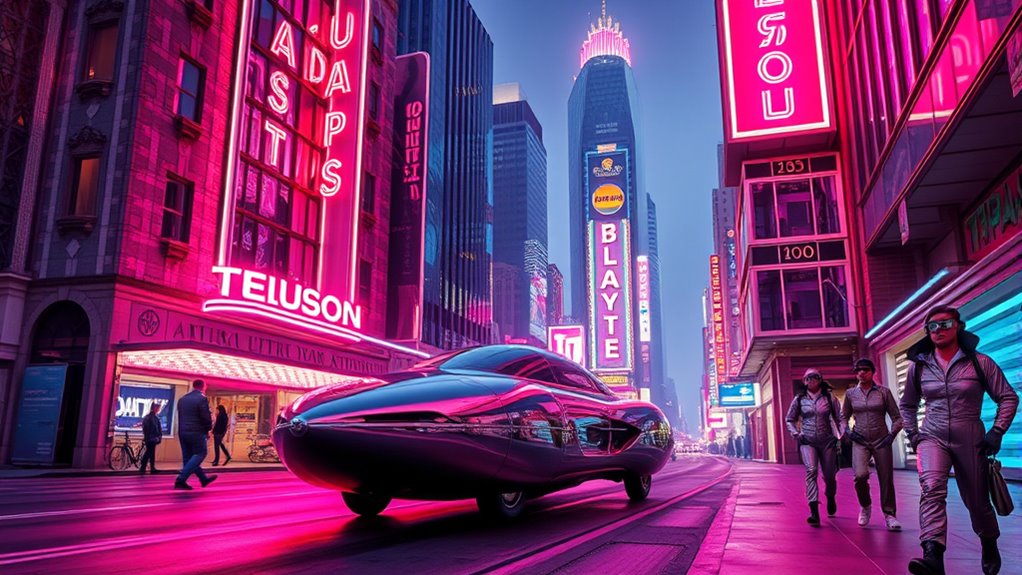
Have you ever wondered what the future looked like in the past? Retro-futurism captures that curiosity perfectly, blending nostalgic visions of yesterday with the technological optimism of earlier eras. It’s a style that celebrates vintage aesthetics—think sleek chrome surfaces, bold geometric shapes, and pastel color palettes—while imagining how those designs would translate into a future powered by innovation. You might see a 1950s-inspired spaceship with fins and shiny metallic finishes or a mid-century modern living room filled with futuristic gadgets that seem almost quaint today. This fusion of old and new creates a unique visual language that’s both charming and forward-thinking.
Retro-futurism blends vintage design with futuristic visions, inspiring hope and innovation through nostalgic yet forward-thinking aesthetics.
As you explore retro-futurism, you notice how it reflects a sense of hope and confidence in technology’s potential. Back when the future was imagined with optimism, scientists and designers believed that new inventions would bring greater comfort, efficiency, and even a better quality of life. This belief is woven into the aesthetic choices—curved lines, shiny surfaces, and streamlined designs—giving each piece a sleek, optimistic vibe. It’s not just about nostalgia; it’s about celebrating the idea that progress can be beautiful and inspiring. You see this in classic sci-fi movies, vintage concept art, and even modern reinterpretations that pay homage to that era’s sense of possibility.
Retro-futurism also invites you to reflect on how past visions of the future influence modern innovation. Many contemporary designers and engineers draw inspiration from these vintage aesthetics and optimistic outlooks. They ask, “What if we applied that same sense of wonder and creativity today?” It’s a reminder that design inspiration doesn’t have to be limited to the past. Instead, it can embrace it, blending the familiar with the futuristic to spark new ideas. Whether it’s in architecture, fashion, or technology, the retro-futuristic mindset encourages you to dream big and look at the future through a lens of possibility, not fear.
Ultimately, retro-futurism isn’t just about nostalgia; it’s a celebration of a time when technology was envisioned as a beacon of hope. It reminds you that the future you imagine can be shaped by ideals of progress and optimism, just like in the past. By merging vintage aesthetics with a forward-looking perspective, retro-futurism invites you to appreciate how dreams of tomorrow have always been rooted in the creativity and optimism of yesterday. It’s a fascinating intersection, where history inspires innovation and nostalgia fuels imagination.

Silver Mushroom Table Lamp,3 Way Dimmable Touch Control Modern Desk and Bedside Lighting for Bedroom Office Living Room,Warm White 3000K G45 Bulb Included, Eye Caring Study Lamp for Home Decor
MODERN AESTHETIC TABLE LAMP: The shape of the chrome lamp looks like a mushroom, very cute; And the…
As an affiliate, we earn on qualifying purchases.
As an affiliate, we earn on qualifying purchases.
Frequently Asked Questions
How Does Retro-Futurism Influence Modern Technology Designs?
Retro-futurism influences your modern technology designs by blending vintage inspired interfaces with futuristic fashion elements. You’ll notice sleek, nostalgic aesthetics in devices, making them feel both familiar and innovative. This approach encourages you to see technology as a stylish extension of the past, inspiring designers to create products that evoke nostalgia while pushing forward with cutting-edge features. Retro-futurism keeps your tech both functional and visually enthralling.
Are There Cultural Differences in Retro-Futuristic Aesthetics Worldwide?
You’ll find that retro-futuristic aesthetics vary greatly across cultures, reflecting unique cultural symbolism. For example, Japanese designs often emphasize sleek minimalism, while Western styles lean toward bold, optimistic visuals. These differences showcase design diversity, highlighting how local history and values shape futuristic visions. Remarkably, a 2022 survey found that 65% of global audiences prefer designs that blend their cultural identity with innovative elements, emphasizing the worldwide influence of cultural symbolism in retro-futurism.
Can Retro-Futurism Impact Future Urban Planning and Architecture?
Retro-futurism can profoundly influence future urban planning and architecture by shaping urban aesthetics and inspiring new design paradigms. As you incorporate nostalgic elements with innovative concepts, you create spaces that blend comfort and progress. This approach encourages sustainable, visually appealing environments that resonate emotionally with people. By embracing retro-futuristic ideas, you foster cities that honor the past while boldly stepping toward future technological and aesthetic advancements.
What Are the Ethical Considerations of Retro-Futuristic Innovations?
You face significant ethical considerations with retro-futuristic innovations, like privacy concerns and societal implications. These ideas can revolutionize how we live, but they might also threaten personal freedoms or deepen inequalities if misused. It’s essential to balance innovation with responsibility, ensuring technology benefits everyone without infringing on privacy or creating new divides. Think critically about the long-term impacts, because history shows unchecked progress can lead to unintended consequences.
How Does Retro-Futurism Affect Contemporary Pop Culture and Media?
You see retro-futurism influence contemporary pop culture and media through nostalgic branding and vintage aesthetics. It inspires movies, fashion, and advertising, creating a sense of familiarity while feeling fresh. By blending past visions of the future with modern design, you’re drawn to its unique charm. This fusion encourages creativity, sparks trends, and resonates emotionally, making retro-futurism a powerful force shaping how you experience and interpret current pop culture.

CroBlissful 2 Pcs Mid Century Modern Wall Art Wood Mid Century Elegance Decor Accents Abstract Wall Sculpture Geometric Panels for Interior Panel Art for Home Living Room(Brown)
Inclusive and Exquisite Design: includes 2 Mid Century modern style wall decor pieces, each individually crafted with an…
As an affiliate, we earn on qualifying purchases.
As an affiliate, we earn on qualifying purchases.
Conclusion
As you explore retro-futurism, you realize how seamlessly nostalgia and innovation intertwine—just like the vintage gadgets and sleek designs that seem to predict your future. It’s no coincidence that your favorite sci-fi films echo the same blend of past dreams and future possibilities. Embracing this style reminds you that sometimes, the best ideas come from a perfect collision of yesterday’s hopes and tomorrow’s innovations. After all, history often repeats itself in the most inspiring ways.

– Vintage Science Fiction Horror Movie Poster Invasion of the Saucer-Men – 24×36
Heavy Weight Acid Free Paper, Archival Acid Free Inks
As an affiliate, we earn on qualifying purchases.
As an affiliate, we earn on qualifying purchases.

Wittolins UFO-Shaped Disco Ball Home Décor – Elevate Your Space with Retro-Reflective Silver Elegance
Crafted with precision, our disco ball boasts a retro-reflective surface that scatters light in every direction. Get ready…
As an affiliate, we earn on qualifying purchases.
As an affiliate, we earn on qualifying purchases.