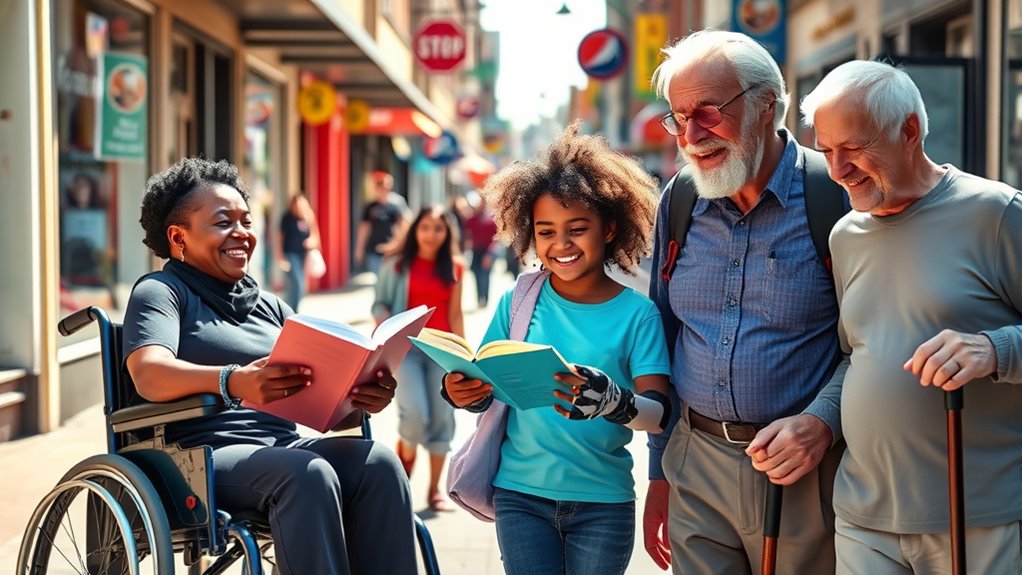
To effectively represent diverse users with inclusive imagery, focus on showcasing a variety of ages, genders, cultures, and abilities in your visuals. Use authentic and respectful depictions that avoid stereotypes and outdated clichés. Consider accessibility by including descriptive alt text and high contrast visuals. Thoughtful imagery helps foster understanding, belonging, and equity. If you keep exploring, you’ll gain deeper insights into creating impactful, representative visuals that resonate with everyone.
Key Takeaways
- Use diverse models representing different ages, ethnicities, genders, and abilities to reflect a broad audience.
- Incorporate culturally sensitive visuals that respect and authentically portray various backgrounds.
- Include descriptive alt text and high-contrast visuals to ensure accessibility for all users.
- Avoid stereotypes and outdated clichés, promoting authentic and varied representations.
- Ensure image placement and design foster inclusivity, understanding, and a welcoming environment.

Have you ever noticed how the images we see every day can shape our understanding of the world? The photos, icons, and visuals we encounter influence how we perceive ourselves and others. When it comes to creating inclusive imagery, it’s vital to think about accessibility considerations and cultural sensitivity. These elements aren’t just optional; they’re fundamental to designing visuals that truly reflect the diversity of your audience.
Accessibility considerations mean ensuring that your images are usable and understandable by everyone, including people with disabilities. For example, when using images of people, consider including alt text that describes the scene clearly and accurately. This helps visually impaired users who rely on screen readers to grasp the context. Additionally, avoid overly complex visuals or color schemes that might be difficult for color-blind users to interpret. Use high contrast and simple compositions to make images more accessible. Consider also the placement of images to prevent distractions or confusion for users relying on assistive technologies. These thoughtful adjustments guarantee that your visuals are inclusive and welcoming to all.
Ensure images include descriptive alt text and use high contrast for accessibility and inclusivity.
Cultural sensitivity plays a vital role in shaping inclusive imagery as well. You want your visuals to respect and reflect the diverse backgrounds of your audience without perpetuating stereotypes or misunderstandings. This means choosing images that portray people in authentic, varied contexts rather than clichéd or outdated stereotypes. When selecting models, aim for representation across different ages, genders, ethnicities, and abilities, making sure everyone can see themselves reflected positively. It’s also important to be aware of cultural symbols, gestures, and attire to avoid misinterpretations or unintended offense. By approaching your imagery with cultural sensitivity, you demonstrate respect for different traditions and experiences, fostering a sense of belonging.
Furthermore, understanding asset division can help you recognize the importance of fairness and diversity in representation, ensuring that visuals reflect equitable and respectful portrayals of all individuals. By approaching your imagery with cultural sensitivity, you demonstrate respect for different traditions and experiences, fostering a sense of belonging.
Combining accessibility considerations with cultural sensitivity ensures that your visuals resonate with a broad audience while respecting individual differences. It’s not enough to simply include diverse faces; you also need to think about how those images are perceived and understood. When done thoughtfully, inclusive imagery can break down barriers, promote understanding, and create a more welcoming environment. Remember, the goal is to communicate openly and honestly, making everyone feel seen and valued. By prioritizing these principles, you help build a more equitable digital space where all users can engage comfortably and confidently.
Frequently Asked Questions
How Can I Assess if My Imagery Is Truly Inclusive?
To assess if your imagery is truly inclusive, start by reviewing your visuals for visual consistency and authentic representation of diverse users. Ask yourself if the images reflect real-life diversity, including age, gender, ethnicity, and ability. Conduct authenticity verification by seeking feedback from diverse communities or experts. Guarantee your visuals avoid stereotypes and genuinely resonate with all audiences, creating an inclusive environment that celebrates differences.
What Are Common Pitfalls in Representing Diverse Users?
You might unintentionally fall into the trap of stereotype avoidance, but forget to address visual bias, which is even trickier! Common pitfalls include relying on exaggerated clichés, oversimplifying identities, or showcasing only certain skin tones, leading to visual bias. These mistakes make your imagery less authentic and exclude many users. To avoid them, stay mindful, diversify your visuals thoughtfully, and challenge stereotypes to truly represent everyone.
How Do Cultural Differences Influence Inclusive Imagery?
You need to contemplate how cultural symbolism shapes perceptions in inclusive imagery. Cultural differences influence how people interpret visual elements, so what’s respectful in one culture might be offensive in another. Avoid relying on visual stereotypes, which can reinforce misconceptions. Instead, aim for authentic representations that respect diverse backgrounds, ensuring your imagery resonates positively across cultures and avoids misinterpretation or alienation.
Are There Tools to Help Create Inclusive Visuals?
Yes, there are tools to help create inclusive visuals. You can use stock photo libraries that focus on diversity, offering images representing various races, ages, and abilities. Editing tools like Canva or Adobe Photoshop allow you to customize images to better reflect inclusivity. These tools enable you to select, modify, and combine visuals, ensuring your imagery accurately represents diverse users and promotes inclusivity effectively.
How Can I Involve Diverse Communities in Image Selection?
You can’t just guess; involving diverse communities in image selection is the game-changer! Engage them through community outreach, surveys, or focus groups, making sure their voices shape your visuals. Actively seek diverse feedback to understand different perspectives and guarantee your images truly reflect everyone. By prioritizing genuine community engagement, you’ll create visuals that resonate authentically and foster inclusivity, making everyone feel seen and valued.
Conclusion
By choosing inclusive imagery, you guarantee everyone feels seen and valued. For example, imagine a clothing brand showcasing models of different ages, sizes, and abilities in their ads. This approach not only broadens your audience but also fosters genuine connection. When you represent diverse users authentically, you create a welcoming environment that reflects the real world. Embrace inclusive imagery—your customers will notice and appreciate your commitment to diversity and representation.